APA Mental Health Video Case Study | Yans Media
The Challenge
The American Psychological Association Foundation needed to break through a barrier familiar to mental health advocates: convincing people in crisis that seeking help is possible, safe, and judgment-free. Their campaign targeted three distinct audiences—a young woman struggling with anxiety, a grieving widower facing depression, and a new mother experiencing postpartum depression—each requiring a different emotional entry point.

The videos needed to work across multiple platforms (social media, websites, conferences, community events) and drive immediate action through the MentalHealthCareWorks.org campaign. But the production approach presented challenges: live-action footage risked feeling too clinical or staged, potentially reinforcing the institutional barriers that keep people from seeking care.
The Foundation needed an approach that balanced authenticity with relatability, clinical accuracy with emotional warmth, and production efficiency with platform versatility.
Our Mixed Media Approach
We chose mixed media animation—blending real-world photography with animated characters—to create stories that feel simultaneously authentic and accessible. This technique brings familiar environments to life while giving viewers relatable characters they can see themselves in, without the logistical complexity and timeline constraints of live-action production.
Why Mixed Media Works for Mental Health Storytelling:
Mixed media animation offers a unique advantage for sensitive subject matter: it grounds stories in recognizable real-world settings (neighborhood skate parks, local fishing piers, home nurseries) while using animated characters to create emotional distance that feels safe rather than clinical. Viewers can project themselves into the story without the self-consciousness that comes from watching actors portray mental health struggles. The animated characters become universal stand-ins—"this could be me"—while the photographic environments provide the authenticity needed to build trust.
Production Strategy:
We developed three character-driven narratives:
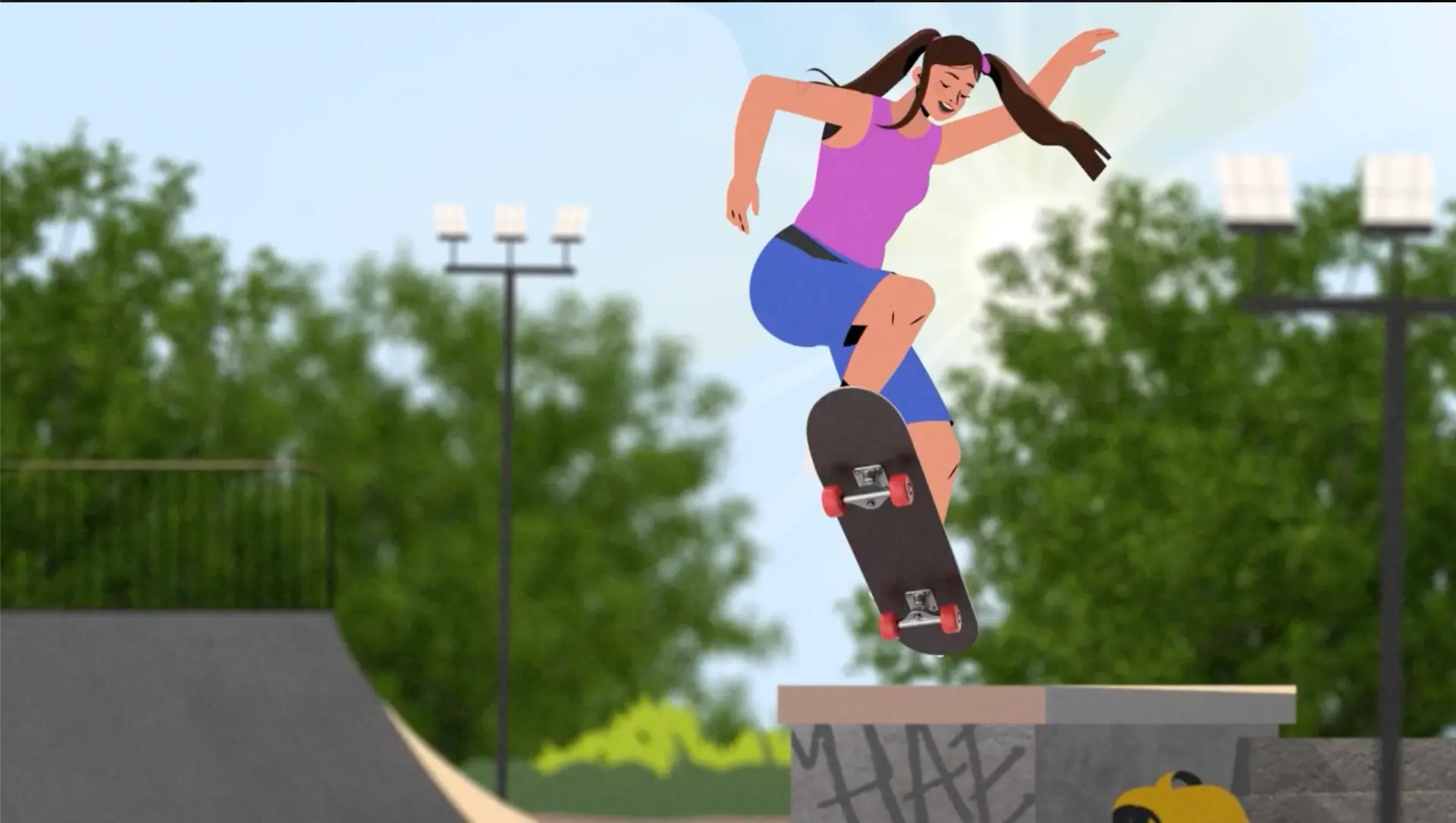
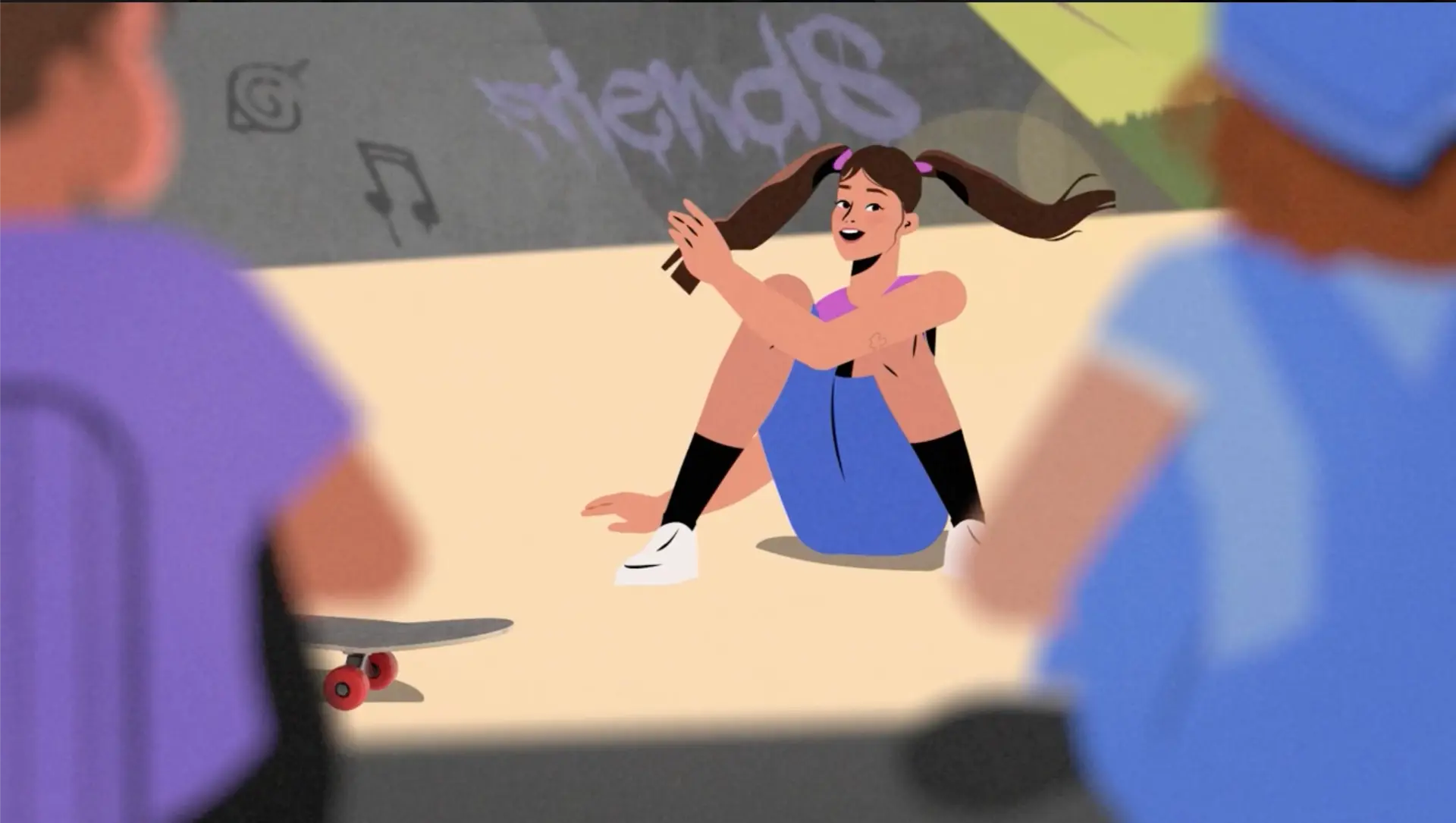
Lizzie's Story (Anxiety): A young skateboarder whose anxiety used to keep her from leaving the house, much less landing a Backside 180. We show her journey from isolation to reclaiming her passion, using the skate park as a visual metaphor for the spaces anxiety can take away—and treatment can help you reclaim.
Diego's Story (Grief & Depression): A widower who lost himself after losing his wife, disconnecting from family and activities he once loved. His granddaughter's call becomes the catalyst for change. We follow him back to fishing—a simple, quiet activity that represents reconnection with life and hope for "brighter days ahead."

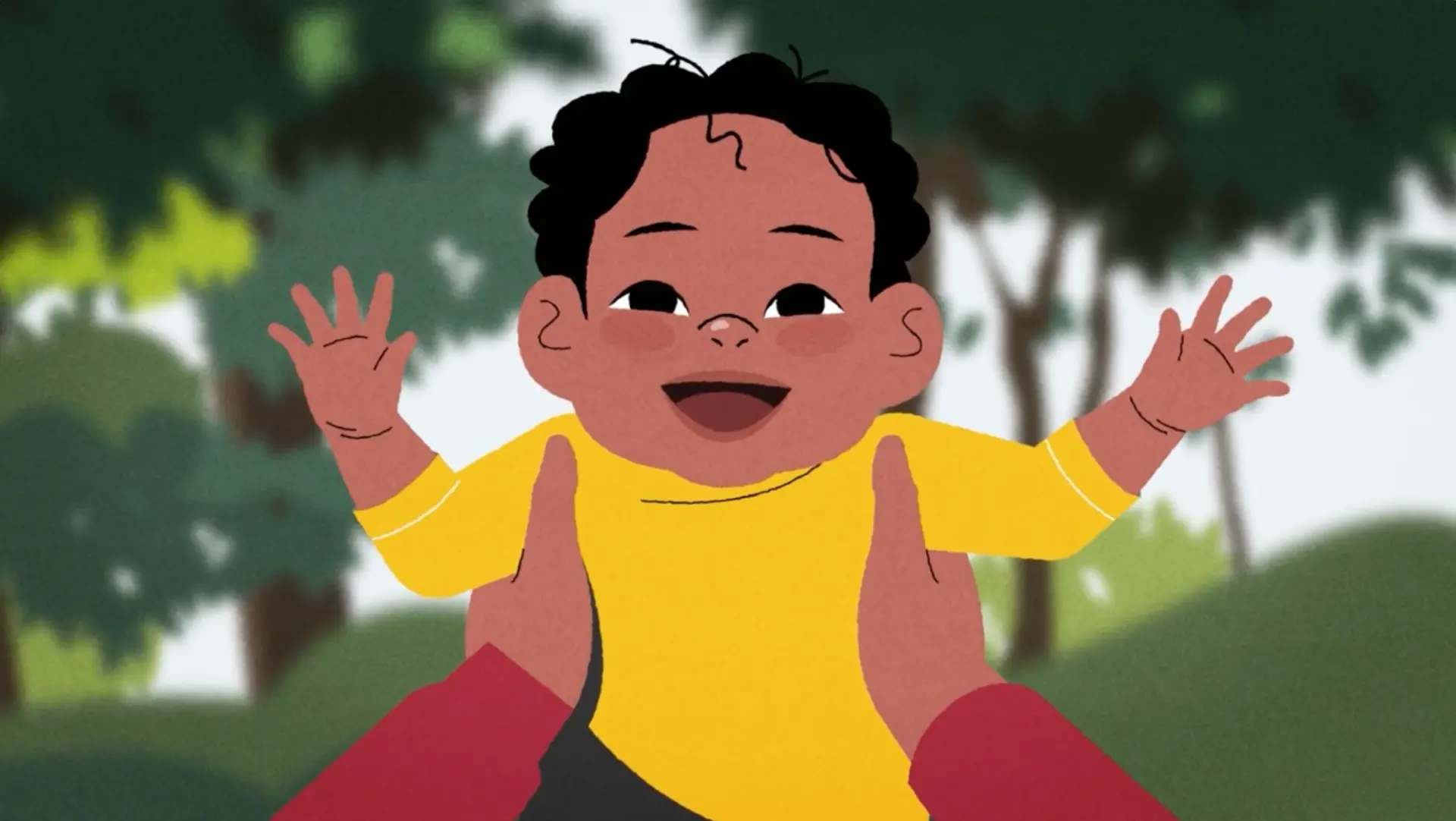
Simone's Story (Postpartum Depression): A new mother confronting the gap between expected joy and actual experience. Her story addresses the isolation many new parents feel when their emotions don't match societal expectations, showing that "caring for him started with caring for me."
Each narrative follows the same structure: establish the emotional weight of the struggle, introduce the turning point ("that's when I made the call"), show the path forward through professional support, and end with a moment of restored normalcy—not perfection, but progress.
Visual & Technical Execution:
- Real Photography Base: We sourced and integrated photography of authentic locations—skate parks, waterfront piers, home interiors—to ground each story in familiar, relatable environments.
- Animated Character Integration: Characters are illustrated and animated to move naturally within photographic environments, creating visual cohesion while maintaining the emotional accessibility animation provides.
- Motion Graphics & Text: Campaign messaging, the "Mental Health Care Works When You Make the Call" tagline, QR codes, and partner logos are integrated seamlessly without disrupting narrative flow.
- Multi-Format Delivery: We delivered both 30-second stories (full narrative arc) and 15-second social cuts (condensed emotional hooks) to maximize platform flexibility—from Instagram Stories to conference screens to website embeds.
Tone & Voice:
The voiceover scripts use first-person perspective to create intimacy and authenticity. Rather than medical language or clinical framing, each character speaks conversationally about their experience: "I lost myself too," "there must be something wrong with me," "things are feeling right, even if they don't always go that way." This approach normalizes mental health struggles as human experiences, not medical conditions requiring specialized vocabulary.
Campaign Integration
Beyond the videos themselves, we designed each piece to drive immediate action:
- QR Code Integration: Every video includes a scannable QR code linking directly to MentalHealthCareWorks.org resources, reducing friction between "I should get help" and actually taking the first step.
- Clear Call-to-Action: The consistent tagline "Mental Health Care Works When You Make the Call" appears verbally and visually, reinforcing that help is accessible and effective.
- Partnership Visibility: APA Foundation and partner logos appear in closing frames, building institutional trust and showing viewers this is a legitimate, established resource.
- Platform Optimization: 30-second versions work for website embeds, conference presentations, and longer-form social posts, while 15-second cuts are optimized for Stories, Reels, and rapid-scroll social feeds.
Results & Impact
The completed nonprofit video production campaign gave APA Foundation a versatile, multi-platform asset that:
- Balances Clinical Accuracy with Emotional Accessibility: Each story presents medically accurate information (anxiety, depression, postpartum depression) without clinical coldness, making mental health care feel approachable rather than intimidating.
- Creates Multiple Entry Points: Three distinct characters ensure diverse audiences can find themselves represented—whether they're experiencing anxiety that limits daily activities, grief that leads to isolation, or postpartum experiences that don't match expectations.
- Drives Immediate Action: QR codes and clear calls-to-action transform passive viewing into active help-seeking behavior, supporting the campaign's ultimate goal of increasing access to mental health services.
- Provides Format Flexibility: Multiple video lengths allow APA Foundation to deploy the campaign across social media, websites, email campaigns, conferences, and community outreach—maximizing reach and impact across touchpoints.
This project demonstrates how mixed media animation serves as the ideal production approach when nonprofit video storytelling must balance authenticity with relatability, clinical accuracy with emotional warmth, and production efficiency with platform versatility. By grounding animated characters in real-world photography, we created mental health stories that feel both deeply personal and universally accessible—proving that the right visual approach can transform "you should seek help" into "help feels possible for someone like me, right now."
Credits
Similar project case studies


